Legal Guide for Foreign Nationals and Overseas Vietnamese
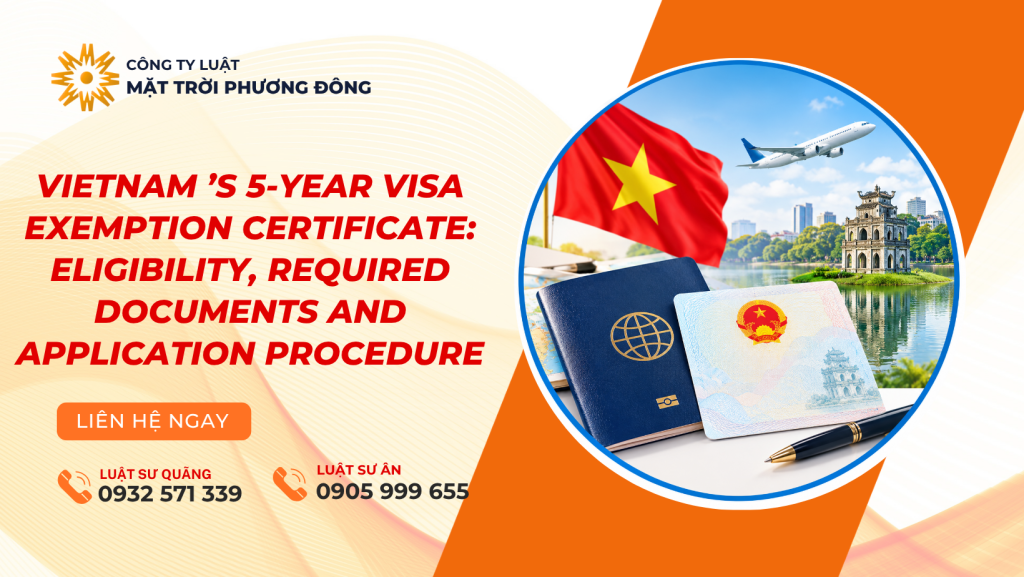
Vietnam’s 5-Year Visa Exemption Certificate (Giấy miễn thị thực) allows eligible individuals to enter Vietnam without having to apply for a separate visa for each visit, subject to applicable immigration regulations.
The certificate is generally available to overseas Vietnamese and foreign nationals who are spouses or children of Vietnamese citizens or overseas Vietnamese, provided that they satisfy the relevant eligibility requirements and submit sufficient supporting documentation.
For foreign nationals who frequently travel to Vietnam to visit family members or attend to personal matters, obtaining a Visa Exemption Certificate can simplify the entry process and reduce the need for repeated visa applications.
This article provides an overview of the applicable legal framework, eligibility criteria, required documents, application procedures, processing considerations, and key legal issues associated with Vietnam’s 5-Year Visa Exemption Certificate.
1. What Is Vietnam’s 5-Year Visa Exemption Certificate?
A Vietnam 5-Year Visa Exemption Certificate is an immigration document that allows an eligible holder to enter Vietnam without obtaining a separate visa for each entry, subject to the conditions prescribed by Vietnamese law.
Its legal basis primarily includes:
- Law on Entry, Exit, Transit and Residence of Foreigners in Vietnam, as amended from time to time.
- Decree No. 82/2015/ND-CP, which regulates visa exemption for overseas Vietnamese and their foreign spouses and children, as amended or supplemented where applicable.
- Other relevant legislative instruments and implementing regulations governing immigration, consular procedures, and administrative fees.
The certificate should be distinguished from a Vietnamese visa, a temporary residence card, and Vietnamese citizenship. Each serves a different legal purpose and confers different rights.
In particular, the Visa Exemption Certificate does not grant Vietnamese citizenship, permanent residence, or an unrestricted right to reside or work in Vietnam.
Eligible holders must continue to comply with applicable immigration requirements, including passport validity, permitted length of stay, and any conditions imposed by the competent authorities.
2. Who Is Eligible for a 5-Year Visa Exemption Certificate?
Eligibility generally falls into the following categories.
2.1. Overseas Vietnamese
Overseas Vietnamese may apply for a Visa Exemption Certificate if they satisfy the applicable statutory requirements.
Applicants may be required to provide documentary evidence of their Vietnamese origin or former Vietnamese nationality. Depending on the individual circumstances, relevant evidence may include birth certificates, former Vietnamese passports, nationality-related documents, or other official records establishing Vietnamese origin.
The precise documents required will depend on the applicant’s personal history and the evidence available.
2.2. Foreign Spouses and Children of Vietnamese Citizens or Overseas Vietnamese
Foreign nationals may also be eligible if they are spouses or children of Vietnamese citizens or eligible overseas Vietnamese.
Depending on the circumstances, supporting documents may include:
- A marriage certificate establishing the marital relationship.
- A birth certificate establishing the parent-child relationship.
- Other official documents accepted by the competent Vietnamese immigration or consular authority.
Foreign nationals should note that eligibility is not determined solely by having a family connection to a Vietnamese person. The applicant must fall within a category recognized by the applicable immigration regulations and satisfy the relevant documentary and procedural requirements.
Where supporting documents were issued overseas, additional authentication, consular legalization, or Vietnamese translation requirements may apply, subject to any applicable exemption.
3. Eligibility Requirements and Legal Conditions
Before submitting an application, applicants should review the following requirements.
3.1. Valid Passport or International Travel Document
Applicants generally need a valid passport or other qualifying international travel document.
The validity of the Visa Exemption Certificate is linked to the validity of the applicant’s travel document. Under the applicable rules, the certificate’s validity must not exceed the permitted period relative to the passport’s expiry date.
Applicants should therefore ensure that their passports have sufficient remaining validity before applying.
3.2. Evidence of Vietnamese Origin or Family Relationship
Applicants must provide evidence establishing the legal basis for their eligibility.
For overseas Vietnamese, this may involve demonstrating Vietnamese origin or former Vietnamese nationality.
For foreign spouses or children, the relevant evidence will ordinarily concern the marital or parent-child relationship.
Where names, dates of birth, or other personal information differ between documents, applicants may need additional evidence or official clarification to establish the relationship.
3.3. Compliance with Vietnamese Immigration Regulations
Applicants remain subject to Vietnamese immigration and national security requirements.
The competent authorities may examine whether an applicant falls within a statutory category of persons who are not permitted to enter Vietnam or is otherwise ineligible under the applicable legislation.
Meeting the documentary requirements does not, by itself, guarantee approval.
4. Required Documents for a 5-Year Visa Exemption Certificate
The precise document checklist may vary according to the applicant’s nationality, place of application, immigration status, and the legal basis for eligibility.
The following is a general checklist.
4.1. Documents Generally Required
Applicants should prepare:
- A completed Visa Exemption Certificate application form in the prescribed format.
- A valid passport or other qualifying international travel document.
- Photographs meeting the applicable specifications, where required.
- Documents establishing eligibility for the exemption.
- Additional documents requested by the competent Vietnamese authority, if applicable.
Applicants should confirm the current application form, photograph specifications, and submission requirements with the relevant Vietnamese diplomatic mission or immigration authority before filing.
4.2. Additional Documents for Overseas Vietnamese
Depending on the applicant’s circumstances, evidence may include:
- A Vietnamese birth certificate.
- A former Vietnamese passport or identity document.
- Documents concerning Vietnamese nationality, including relevant nationality decisions or records.
- Other official documents demonstrating Vietnamese origin.
Not every applicant will need to provide all of these documents. The appropriate evidence should be determined on a case-by-case basis.
4.3. Additional Documents for Foreign Spouses or Children
Foreign nationals applying on the basis of a family relationship may need to provide:
- A marriage certificate, for an applicant who is the spouse of a Vietnamese citizen or eligible overseas Vietnamese.
- A birth certificate, for an applicant who is the child of a Vietnamese citizen or eligible overseas Vietnamese.
- Other documents establishing the relevant relationship, where necessary.
Foreign-issued civil status documents may need to be legalized or authenticated and translated into Vietnamese in accordance with applicable requirements.
4.4. Replacement of a Lost or Damaged Certificate
If a Visa Exemption Certificate has been lost or damaged, the holder should contact the competent authority to determine the appropriate replacement procedure.
Depending on the circumstances, the application may require a prescribed declaration, an explanation of the loss or damage, or supporting documentation.
Applicants should distinguish between an application for a replacement certificate and an application for a new certificate, as the applicable procedures and supporting documents may differ.
5. Application Procedures
The appropriate application channel depends primarily on the applicant’s location and circumstances.
5.1. Application Through a Vietnamese Diplomatic Mission Abroad
Applicants residing outside Vietnam may generally submit their applications through the competent Vietnamese diplomatic mission or consular office in their country of residence.
The procedure typically involves the following steps:
- Determine eligibility: Confirm that the applicant falls within a qualifying category under Vietnamese immigration law.
- Prepare the application: Complete the prescribed form and assemble the passport, photographs, and supporting documents.
- Submit the application: File the application with the competent Vietnamese diplomatic or consular authority and pay the applicable fee.
- Administrative review: The authority examines the application and may conduct verification or request additional information.
- Receive the result: If approved, the applicant receives the Visa Exemption Certificate in accordance with the applicable procedure.
Applicants should verify whether an appointment, in-person submission, or additional documentation is required by the relevant mission.
5.2. Application in Vietnam
Applicants who are lawfully present in Vietnam should confirm whether they may submit their applications through the competent immigration authority in Vietnam.
The procedure may involve:
- Confirming the applicant’s current immigration status and eligibility.
- Preparing the prescribed application and supporting evidence.
- Submitting the application to the competent authority in accordance with the applicable procedure.
- Responding to any requests for clarification or supplementary documents.
- Receiving the decision and, where approved, the certificate.
The correct filing authority and procedure should be confirmed before submission, particularly where the applicant is already in Vietnam under a visa or another immigration status.
6. Processing Time and Government Fees
Processing time
Processing times depend on the applicable procedure, the authority receiving the application, the completeness of the supporting documents, and whether additional verification is necessary.
Applicants should confirm the current statutory processing period with the relevant authority. Any indicative timeframe should be treated as an estimate rather than a guarantee of approval or issuance.
Government fees
The applicable fee depends on the type of application and the current fee schedule.
Applicants should verify the official fee before filing rather than relying on an amount quoted by an intermediary or an outdated online article.
Any professional service fee charged by a law firm or immigration service provider is separate from the government fee.
7. Validity of the Certificate and Permitted Length of Stay
7.1. Validity of up to Five Years
The Visa Exemption Certificate may be issued for a period of up to five years, subject to the applicable legal requirements.
Its actual validity may be shorter depending on the validity of the applicant’s passport or other qualifying travel document and the relevant statutory restrictions.
Accordingly, applicants should not assume that every certificate will automatically be valid for the full five-year period.
7.2. Duration of Each Stay
The validity of the certificate must be distinguished from the permitted duration of each visit to Vietnam.
A certificate valid for five years does not necessarily authorize continuous residence in Vietnam for five years. The permitted length of stay for each entry is determined by the applicable immigration regulations and the conditions governing the individual’s entry.
Applicants should confirm the current permitted stay period before travelling.
7.3. Extension or Further Stay
A Visa Exemption Certificate should not be regarded as an automatic entitlement to extend a stay beyond the period permitted by law.
If a holder wishes to remain in Vietnam beyond the authorized period, they should obtain advice on the applicable immigration procedure and whether an extension or another lawful immigration arrangement is available in their circumstances.
8. Common Issues and Practical Legal Considerations
Applicants should pay particular attention to the following matters:
- Insufficient evidence of eligibility: A birth certificate or marriage certificate may not, in every case, establish all elements required by the applicable regulations.
- Inconsistent personal information: Differences in names, dates of birth, or other details across documents may result in requests for further evidence.
- Overseas documents: Authentication, consular legalization, and translation requirements should be checked before submission.
- Passport expiry: A passport approaching its expiry date may affect the validity period of the certificate.
- Immigration status in Vietnam: Applicants already in Vietnam should confirm the correct application channel and ensure that their existing immigration status remains compliant with the law.
- Changes in legislation: Eligibility criteria, administrative procedures, fees, and permitted stays may change. The rules in force at the time of application should be checked.
Early review of the documents can help identify potential issues and reduce the risk of delays caused by incomplete applications.
9. Legal Advisory Services for Vietnam’s 5-Year Visa Exemption Certificate
Foreign nationals and overseas Vietnamese may benefit from legal assistance where their eligibility is unclear, their civil status documents were issued overseas, or their application involves complicated nationality or immigration history.
A legal review may cover:
- Assessing eligibility under the applicable Vietnamese immigration regulations.
- Identifying the appropriate application procedure and competent authority.
- Reviewing passports and supporting civil status documents.
- Advising on document authentication, consular legalization, and translation.
- Preparing an application checklist and identifying potential documentary deficiencies.
- Advising on certificate validity, permitted stays, and alternative immigration options where appropriate.
Conclusion
Vietnam’s 5-Year Visa Exemption Certificate can provide a practical immigration solution for eligible overseas Vietnamese and foreign family members who travel to Vietnam regularly.
However, eligibility, documentary requirements, certificate validity, processing time, fees, and permitted length of stay must be assessed under the regulations applicable to each case.
Before submitting an application, applicants should confirm the current requirements with the competent Vietnamese immigration or consular authority or seek advice from a qualified legal professional.
Disclaimer: This article is intended for general informational purposes and does not constitute legal advice. Immigration requirements may change, and the outcome of an individual application depends on the applicable law and the applicant’s circumstances.
———————————————————————————————————————
Hãy liên hệ để được tư vấn và hỗ trợ kịp thời:
 LS.Quãng: 0932.571.339 – LS.Ân: 0905.999.655
 Website:https://luatmtpd.vn/
 Email:
 Fanpage:
 Văn phòng Công ty tại Đà Nẵng Hoạt động tại Quảng Nam Hoạt động tại Huế Hoạt động tại Quảng Bình